
When it comes to gathering feedback, measuring satisfaction, or evaluating performance, the 1 to 5 rating scale stands as one of the most effective and widely used tools in research, business, and customer experience management. But what makes this particular scale so powerful, and how can you leverage it effectively?
Why the 1 to 5 Rating Scale Works
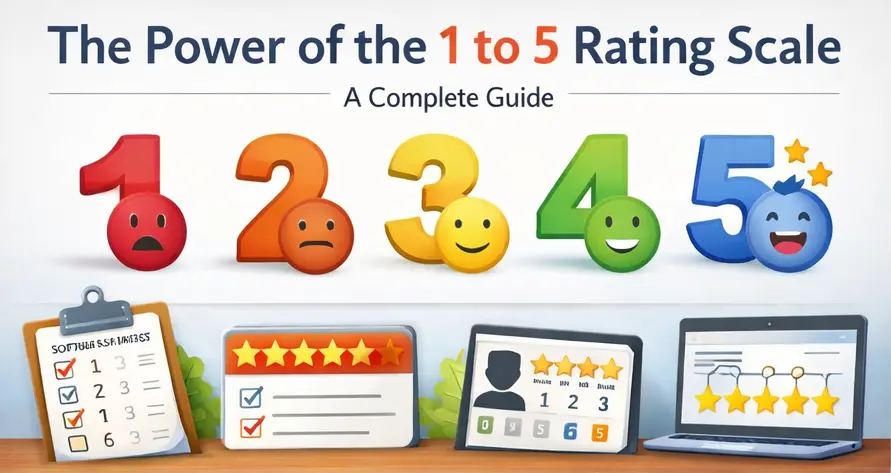
The 1 to 5 rating scale, often called a Likert scale, strikes the perfect balance between simplicity and nuance. Unlike binary yes/no questions or overly complex 10-point scales, the 1 to 5 rating scale offers respondents just enough options to express their true feelings without overwhelming them with choices.
Research shows that people naturally think in terms of poor, fair, good, very good, and excellent—which maps perfectly to a five-point system. This cognitive alignment makes the 1 to 5 rating scale intuitive and reduces survey fatigue.
Common Applications of the 1 to 5 Rating Scale
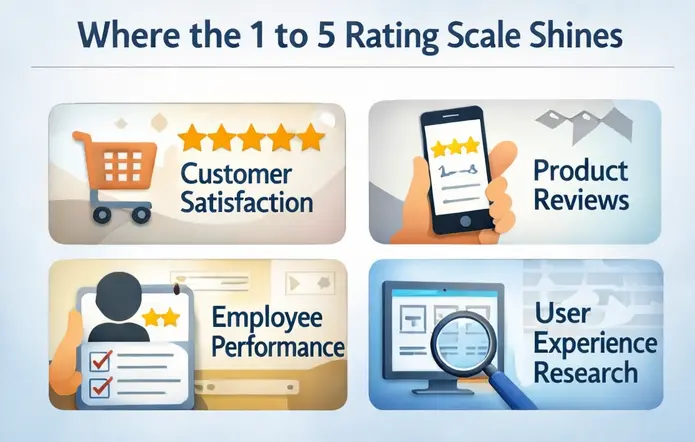
Customer Satisfaction Surveys
Businesses routinely use the 1 to 5 rating scale to gauge customer satisfaction. Questions like “How satisfied are you with our service?” paired with a 1 to 5 rating scale provide actionable insights without requiring lengthy explanations.
Product Reviews
From e-commerce platforms to restaurant ratings, the 1 to 5 rating scale helps consumers make quick decisions. A glance at star ratings immediately communicates quality and reliability.
Employee Performance Reviews
HR departments leverage the 1 to 5 rating scale to evaluate employee competencies, from communication skills to technical proficiency. This standardized approach ensures fairness and consistency across evaluations.
User Experience Research
UX researchers use the 1 to 5 rating scale to measure usability, interface design, and overall user satisfaction, helping teams prioritize improvements.
Best Practices for Using a 1 to 5 Rating Scale
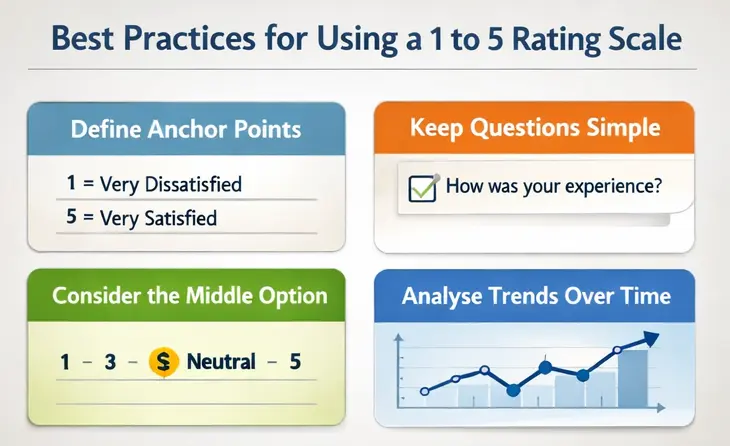
1. Define Clear Anchor Points
Each number on your 1 to 5 rating scale should have a clear meaning. For example:
- 1 = Very Dissatisfied
- 2 = Dissatisfied
- 3 = Neutral
- 4 = Satisfied
- 5 = Very Satisfied
Clear definitions prevent ambiguity and ensure consistent responses.
2. Keep Questions Simple
When using a 1 to 5 rating scale, avoid complex or multi-part questions. Each question should evaluate a single attribute or experience.
3. Consider the Middle Option
The middle point (3) in a 1 to 5 rating scale allows respondents to express neutrality. While some researchers avoid neutral options, in most contexts, it provides valuable information about indifference or mixed feelings.
4. Analyze Trends Over Time
A single data point from a 1 to 5 rating scale provides a snapshot, but tracking ratings over time reveals patterns, improvements, or declining satisfaction that demand attention.
Advantages of the 1 to 5 Rating Scale
Easy to Understand: The 1 to 5 rating scale requires minimal instruction. Respondents intuitively understand what each number represents.
Quick to Complete: Unlike open-ended questions, a 1 to 5 rating scale can be answered in seconds, increasing completion rates.
Quantifiable Data: Numerical ratings from a 1 to 5 rating scale can be easily analyzed, averaged, and compared across different time periods or demographic groups.
Universal Application: Whether you’re measuring product quality, service delivery, or emotional response, the 1 to 5 rating scale adapts to virtually any context.
Potential Limitations to Consider
While the 1 to 5 rating scale is incredibly versatile, it’s not without drawbacks. Some respondents exhibit central tendency bias, clustering their responses around the middle value (3). Others may demonstrate acquiescence bias, consistently selecting higher ratings to please the surveyor.
Additionally, the 1 to 5 rating scale doesn’t capture the “why” behind responses. Pairing quantitative ratings with optional comment fields provides richer, more actionable feedback.
Implementing Your 1 to 5 Rating Scale Effectively
Modern feedback collection has evolved beyond paper surveys and basic forms. Today’s businesses need streamlined, professional tools to deploy 1 to 5 rating scales across multiple touchpoints—from post-purchase emails to in-app prompts.
Platforms like Feedal.io make it simple to create, distribute, and analyze surveys featuring the 1 to 5 rating scale. With intuitive design interfaces and real-time analytics dashboards, you can transform raw rating data into strategic business insights without technical expertise.
Whether you’re collecting customer feedback after a support interaction or measuring employee satisfaction quarterly, having the right infrastructure to capture and interpret 1 to 5 rating scale responses can dramatically improve your decision-making process.
Converting Ratings into Action
Collecting data through a 1 to 5 rating scale is just the beginning. The real value emerges when you:
- Segment responses by customer type, product line, or time period
- Identify outliers who give extremely low or high ratings and follow up personally
- Track improvement by comparing current 1 to 5 rating scale averages against historical benchmarks
- Close the feedback loop by communicating changes made based on customer input
The Future of Rating Scales
As artificial intelligence and machine learning advance, the traditional 1 to 5 rating scale is being enhanced with predictive analytics and sentiment analysis. However, the fundamental simplicity and effectiveness of the five-point system ensures it will remain relevant.
Forward-thinking organizations are combining 1 to 5 rating scales with other metrics like Net Promoter Score (NPS) and Customer Effort Score (CES) to build comprehensive pictures of customer sentiment.
Conclusion
The 1 to 5 rating scale endures because it works. It respects respondents’ time while providing businesses with quantifiable, actionable data. Whether you’re measuring satisfaction, performance, or preference, this five-point system offers the perfect balance of simplicity and depth.
By implementing best practices—clear anchor points, simple questions, and trend analysis—you can maximize the value of every 1 to 5 rating scale survey you deploy. And with modern feedback platforms streamlining the entire process from creation to analysis, there’s never been a better time to harness the power of this timeless measurement tool.
Ready to elevate your feedback collection strategy? Consider how a robust feedback platform can help you deploy effective 1 to 5 rating scales that drive real business outcomes.
 Prateek Pundir